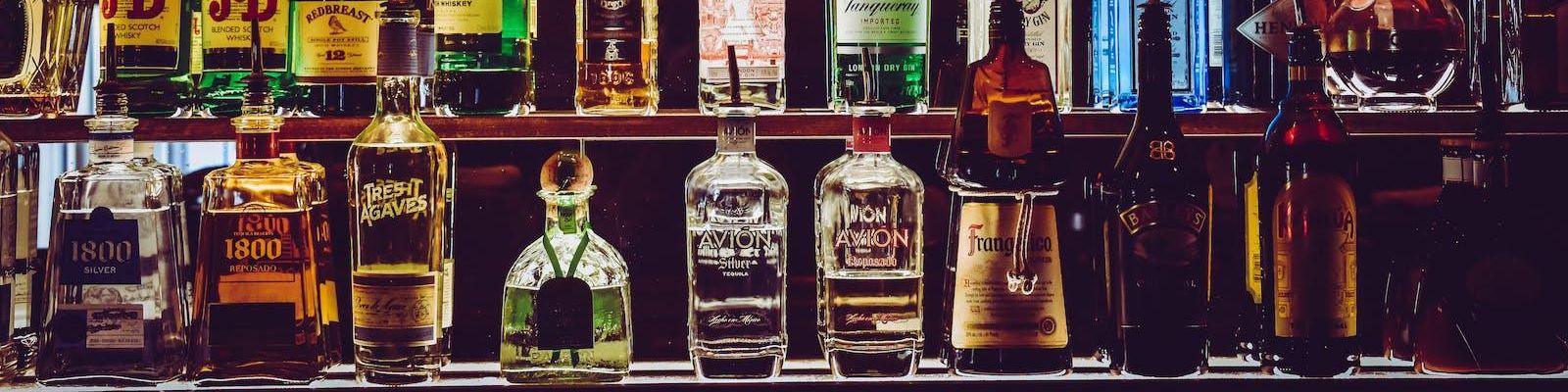
Popular brands: Tanqueray, Seagram's, Beefeater, Bombay Sapphire
Popular brands: Tanqueray, Seagram’s, Beefeater, Bombay Sapphire.
Gin is a distilled grain spirit flavored with plant extracts—mainly the juniper berry. Each distiller has its own spices, herbs, and recipes. Gin was invented in the 1600s by Dutch doctor Dr. Sylvius as an elixir for kidney and digestive problems.
British soldiers sampled the product in the Netherlands and brought it back to England. English gin developed differently from the original heavy-bodied Dutch style. In the 1830s, the English developed London Dry Gin by distilling in a continuous still. The name once indicated where gin was produced; today it indicates a type. Almost all gins on our shelves are labeled “dry,” meaning they have not been sweetened.
Federal regulations do not allow age claims on gin. Most gins are American or English.
English gin is produced from corn, barley, and other grains. The mash ferments, then is distilled in a continuous still at 190 proof. Water reduces the proof, then the liquid is distilled a second time in a modified pot still with flavoring agents and bottled between 80 and 97 proof. Flavoring agents may be combined before the second distillation or suspended in a percolator basket so vapors pass through them.
American gin is produced by distilling or compounding. Distilled gin is distilled with flavoring agents (in the initial or a second distillation). Compound gin combines neutral spirits with extracts of natural flavoring agents.
The Martini
A classic martini is about 3 ounces of gin with dry vermouth to taste (less vermouth makes a “drier” martini), usually garnished with a lemon twist or an olive.